
Just a bit ago, I pointed everyone towards a compilation of some of the better videos posted out there on the web.
Little did I know that just a short while later that list was going to be upstaged and bettered by one created by one of the best sportswriters of our day.
Yep, The Sports Guy has compiled his YouTube Hall of Fame. Check it out if you've got half an hour to waste.
Oh, and if you haven't read his 10th annual NBA Draft running diary, do so now. It's fun watching the draft anticipating the items The Sports Guy will comment on.
Thursday, June 29, 2006

Friday, June 23, 2006
#4 - The Double Kidney Shot Heard Round The Yard
Note: With plunging approval ratings and a deteriorating fan base that not even my charity blogging could reverse, I have decided to end my blogging strike. When I informed Westy of this news, he simply replied, “You will blog for nothing and like it.” So here goes nothing. (Although, I fully realize that this layoff has caused my personal baseball blunders countdown list to lose momentum, and it will be both awkward and “just not the same” as I try to resurrect it in this post. Please bear with me.)
So anyway, I'm at my friend's place playing kickball. We were just a bunch of pre-adolescent boys... probably 5 or 6 on each team. We all loved playing kickball, but this particular yard wasn't exactly suited for the sport. It was a rather narrow yard and it had quite a few trees in the way. In fact, it wasn't uncommon for someone to kick the ball and have it ricochet wildly off a tree in the infield--sometimes landing in foul territory and sometimes not. One time I remember a kid booting a line drive and then as he ran toward first the ball rifled off the tree and came back to take his legs out from under him, causing him to fall flat onto his chest. (And yes, we ruled him out.)
Anyway, back to the story. Now, as most of you know, the whole point of kickball is getting to kick and then capitalizing when you get that chance. When you're out in the field playing defense, the whole point is to get three outs as quickly as possible so you can get back to doing what you want to do, which is to kick.
Of course, when you're playing on a weird-shaped field with trees in the infield and a patio where third base ought to be AND you have too few players to adequately cover all of your bases, some of the innings can run on for what seems like forever. When you're kicking, that's great. But when you're out in the field playing defense, that's miserable. That's why it's important to never let an easy out slip through your hands. If you bungle an easy out, then that likely extends the inning at least another 10 minutes (or approximately 4-5 runs).
So you can imagine my excitement when I was playing left-center field and saw the kickball popped up high in the air, sailing softly in my direction. Once the ball cleared a few key branches, I knew it was mine and soon I’d be back to doing what all kickball players yearn to do—kick.
Pain.
Somehow, some way I did finish out the game. I don’t remember who won nor how many days it took me to completely recover from “The Double Kidney Shot Heard Round The Yard,” but that’s probably because the trauma has suppressed parts of my memory.
Tuesday, June 20, 2006
Insects
Did you know that,
- The longest insect, a walking stick, measured in at almost 22" long?
- An ant in captivity has lived for almost 29 years?
- The mayfly, on the other hand, lives for only 5 minutes past the point it reaches reproductive maturity?
Insects are one of the Earth's most common living things with 925,000 species. They have some crazy members of the family.
All these and more factoids can be found online at the Book of Insect Records.
Thursday, June 15, 2006


Saturday, June 10, 2006
Brick by brick, we can make a difference

Friday, June 09, 2006
What is Pepperoni?
 Do you ever realize you don't know what you thought you knew? The other night we ordered in pizza, of course getting our favorite topping pepperoni.
For some reason, I got to thinking. What exactly is pepperoni? I thought I was pretty sure. I'm sure you probably think you know what animal it comes from too.
As it turns out, I was wrong. The things we don't know about what we eat...
Pepperoni is,
"...a spicy Italian-American variety of dry salami made of pork and beef. Pepperoni is a descendant of the spicy salamis of Southern Italy."So it's a mixture of two kinds of meat. It's seasoned with black and red pepper and then air dried.
And in fact, as it turns out, there are also other kinds of pepperoni available now. I guess I was naive. In fact, in my own refrigerator, I discovered we stock turkey pepperoni. So I guess it's just seasoned with pepperoni flavor. It's healthier, but technically not the real thing.
Saturday, June 03, 2006
All the Best Movies
Now, thanks to a fellow blogger's ambition to compile the best [mostly] sporting video clips to be had and the phenomenon that YouTube has become, we have in one place a great list of the best movie clips the web has to offer.
Check out the movies, several of which are among my favorites, and let me know which you think is best.
Check out the movies, several of which are among my favorites, and let me know which you think is best.
Wednesday, May 31, 2006
Chicago Movies
This Monday evening in Chicago, along Southport, the premiere of the new movie The Break-Up went down.
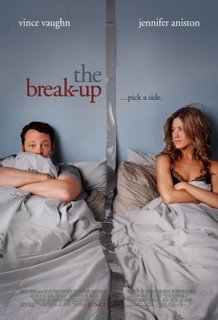 With the upcoming release of set-in-Chicago movies like The Lake House and The Break-Up, I am reminded of all the great movies that have been set in this great city. In fact, I've heard that one of the chase scenes in Above the Law was filmed in my office building's parking garage. Need I remind you of all these great Chicago films?
 And potentially the two most classic of them all:
Monday, May 29, 2006
Welcome to the Family
This Memorial Day weekend here in Chicago, it was hot; there was no doubt summer is here. In our household, though, there were other changes aloft.
On Saturday, my sister arrived as the courier with our new dog.
On Saturday, my sister arrived as the courier with our new dog.
 She is a Chesapeake Bay Retriever, and we adopted her from their rescue society.
The weekend has seen many firsts and I'm sure there will continue to be adjustments. But so far, we're thrilled with our addition. We have bestowed the name of Allerton on her and look forward to the memories we'll make with her. It is sure to be an adventure.
(As her first bath was...) Here my sister and I do our best to clean her up:
Thursday, May 25, 2006
Cabrini Heat
On Tuesday evening NBC news here in Chicago reported on a new film called Cabrini Heat being produced in and about Chicago's much-maligned Cabrini-Green housing projects.
 A trailer for the movie shows a harsh reality, as filmed by Cabrini residents, far removed from other more affluent parts of the city. What it does show, though, is a world that is all too real for many residents in inner cities still today.
An even better source for a view into this too often forgotten world is the highly recommended poignant story, called There Are No Children Here, of two boys growing up in other nearby Chicago Housing Authority public housing projects . This critically acclaimed book captures the essence of the community well.
I would encourage you to watch the clip showing a community I can't help but feel for as it is so deeply in need.
Caution: The linked clip shows graphic violence and extremely hostile and crude language. It is linked to offer a glimpse of a world often unseen. Compassion in our attitudes as we view is prerequisite.
Monday, May 22, 2006
Green Chicago
Most people who are Chicago residents greatly enjoy the city they in which they live. What makes Chicago today so great? Many have argued the renaissance began with the movement to make it a 'green' city. Mainstream media has begun to hold Chicago up as an example of what modern cities should and could do to be on the forefront of the 'green' movement. Even its Latin motto — Urbs in Horto (City in a Garden) — evokes these images. Has Chicago earned the title of America's Green Thumb?
 To give you an idea of what Chicago has done, since 1989, 500,000 trees have been planted in the city. Mayor Daley, since coming to office, has ordered that the heads of all city departments make their operations environmentally friendly. Chicago is now one of the largest users of green energy in the country. I have previously mentioned the movement in the city to convert many rooftops to 'green.' Time magazine says,

To give you an idea of what Chicago has done, since 1989, 500,000 trees have been planted in the city. Mayor Daley, since coming to office, has ordered that the heads of all city departments make their operations environmentally friendly. Chicago is now one of the largest users of green energy in the country. I have previously mentioned the movement in the city to convert many rooftops to 'green.' Time magazine says, The city has been decorated with fancy planters, park space has increased and the lakefront, while still soiled with pollution, is being cleaned and preserved at a level never before seen.Mayor Daley's continued goal is to make Chicago the most environmentally friendly city in the country. Says Chicago's environmental commissioner, Sadhu Johnston,
This is about quality of life. What we're talking about is creating a city that exists in harmony with the world, a place that can be a model. Cities have long been hurtful to the environment. Raw materials came in and waste went out. We're trying to redefine that relationship, and cities can be models.All this work to create a 'green' city has made it an ever more attractive city. That in turn has served to revitalize many of its neighborhoods and helped sparked the urban population growth in areas of the city where much of the investment has been made. The New York Times says,
Chicago [has] attracted more than 100,000 new residents, added tens of thousands of downtown jobs, prompted a high-rise housing boom, reduced poverty rates, built thousands of affordable homes, spurred a $9-billion-a-year visitor and convention industry, and transformed itself into one of the most beautiful cities in America.As a resident, all I can say is, "Keep it up!"
Wednesday, May 17, 2006
The future of transportation
 In the movie Minority Report, one of the action scenes features star Tom Cruise in a chase scene involving this state of the art self-driving Lexus. The film was supposedly set in 2054, so it was obviously science fiction. But the scene whetted our appetites for the exciting technology the future will bring to transportation.
But is a self-driving car only the stuff of science fiction? Could that technology even be available soon? Can you imagine how nice that would be? No more lost driving time. No more traffic jams even. Imagine the possibilities! It would be pretty cool.
And you know what folks, forget 2054, it could be here sooner than you think.
Monday, May 15, 2006
Human Camera
The power of the human mind is unbelievable really. Our ability to harness it is measly at times. A spectacular example of that has recently been causing a stir. Stephen Wiltshire is a savant artist with uncanny ability.
 Check out the truly amazing excerpt from the documentary featuring this story here.
"Given an aerial tour of Rome, for instance, Wiltshire soon reproduced the whole city, in astonishing detail, down to the correct number of arches on the Coloseum – drawing the sketch from memory."
Check out the truly amazing excerpt from the documentary featuring this story here.
Sunday, May 14, 2006
Happy Mother's Day!
To all the moms out there, I hope this was an extremely special day. You deserve the accolades you've received.
And on this Mother's Day, one mother in particular has a very special present--a fantastic story that reminds us all how special it is to have a family. Amy Carlsen of Fargo, ND is the mother of conjoined twin baby girls who were just separated on Friday. Both are doing well, and their mother and father are now the parents of two individual girls. We pray for their continued health.
Again, happy Mother's Day to all you moms.
And on this Mother's Day, one mother in particular has a very special present--a fantastic story that reminds us all how special it is to have a family. Amy Carlsen of Fargo, ND is the mother of conjoined twin baby girls who were just separated on Friday. Both are doing well, and their mother and father are now the parents of two individual girls. We pray for their continued health.
Again, happy Mother's Day to all you moms.
Thursday, May 11, 2006
Return of the King?
Microsoft.
Need I say more? When it comes to personal computer operating systems, Microsoft is the 800 lb. gorilla in the room--and they've been that way for a long time.
Sony.
A mega-company, totally dominant in the music industry for a long, long time. Although slightly weaker lately, Sony's still an empire with deep pockets.
For you, the video game junkie, it's pretty cool to have these two behemoths competing against each other for your gaming dollars. After all, this competition has increased the quality and decreased the prices in the video game market.
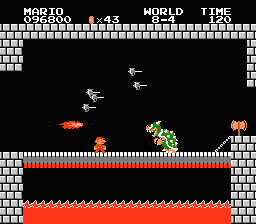
But honestly, this post isn't about Sony or Microsoft. It's not even about you or me. It's about Wii.
Last time around in the U.S., Nintendo finished third in the home video game console market. This time around, the battle has barely begun. Maybe Microsoft Xbox 360 will hold onto its lead, or maybe Sony PlayStation 3 will do as expected when it's released and vault into first place.
But there is a third possibility... maybe, just maybe, the little guy will reclaim his throne.
Need I say more? When it comes to personal computer operating systems, Microsoft is the 800 lb. gorilla in the room--and they've been that way for a long time.
Sony.
A mega-company, totally dominant in the music industry for a long, long time. Although slightly weaker lately, Sony's still an empire with deep pockets.
For you, the video game junkie, it's pretty cool to have these two behemoths competing against each other for your gaming dollars. After all, this competition has increased the quality and decreased the prices in the video game market.
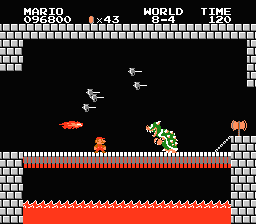
But honestly, this post isn't about Sony or Microsoft. It's not even about you or me. It's about Wii.
Last time around in the U.S., Nintendo finished third in the home video game console market. This time around, the battle has barely begun. Maybe Microsoft Xbox 360 will hold onto its lead, or maybe Sony PlayStation 3 will do as expected when it's released and vault into first place.
But there is a third possibility... maybe, just maybe, the little guy will reclaim his throne.
Wednesday, May 10, 2006
Unintentional Comedy
Sometimes an attempt at serious reporting on your local news goes wrong. You all can probably remember a time when what was supposed to be a solemn report on a unique subject quickly but unintentionally turns into one of the funniest bits you've seen on the news in awhile. Many end up on AFHV, but some are politically incorrect enough that they only circulate as viral video on the Internet. What do these news items say about culture in America today?
Leprechaun (Mobile, AL): 
Whistle Tips (Oakland, CA): 
Sunday, May 07, 2006
Mapping Religion
In honor of Sunday, let's take a look at religiosity in America. A fellow blogger has compiled a wonderful post outlining the degree and type of religious adherence on a county-by-county basis across the country.

The complete rundown is definitely worth checking out if you're curious where, say for instance, Mennonites are most predominate.
Wednesday, May 03, 2006
Rural Abandonment
Globally, our world's rural areas are emptying as our cities fill. Say what you will about this trend, but it's creating a shifting cultural dynamic. This trend is felt in our country as well. Areas of our country are emptying back out, often after having only been settled in the last hundred and fifty years. Growing up in a part of the country where this was the case, it is easy to see the effects of rural depopulation. Some maybe unfairly call it the 'brain drain', but there's no denying young people are in short supply through much of the US's Great Plains. What is left behind is a sometimes depressing, but definitely stark, picture of what life there once was.
The New York Times Magazine profiled poignantly an area of our country in northwestern North Dakota where this is the case. It's an article well worth reading for a taste of the desolation wrought by abandonment and the efforts underway to forestall what some anticipate is the inevitable.

The New York Times Magazine profiled poignantly an area of our country in northwestern North Dakota where this is the case. It's an article well worth reading for a taste of the desolation wrought by abandonment and the efforts underway to forestall what some anticipate is the inevitable.
The picturesque vista of the plains invites new residents.
Monday, May 01, 2006
Immigration
Today, May Day, was marked across our country with massive rallies for immigration rights. The largest was right here in Chicago, where about 300,000 marched through the Loop. Their march ended within view from my office and we watched as thousands upon thousands marched by and eventually dispersed.
Immigration is not an easy issue. Many of the folks marching have lived in our country for many many years and hold jobs that help support society. Unfortunately, they may be here illegally. What should be done with them? What should be done, if anything, to prevent future illegal immigration?
It has been pointed out that maybe it would be best to follow the example of our neighbor to the south in their own immigration standards.
This does not seem to be a practicable solution. For a country such as ours that was built on the backs of immigrants, a measure of thought must be given to the notion that this is the new face of immigration. There does not seem to be an easy answer.
Honestly, we are left hoping for a bit of Solomonic wisdom from a lawmaker who can lead our nation forward on this. We have seen the bills before Congress. Are they the answer?
What do you think is the answer?
Immigration is not an easy issue. Many of the folks marching have lived in our country for many many years and hold jobs that help support society. Unfortunately, they may be here illegally. What should be done with them? What should be done, if anything, to prevent future illegal immigration?
It has been pointed out that maybe it would be best to follow the example of our neighbor to the south in their own immigration standards.
This does not seem to be a practicable solution. For a country such as ours that was built on the backs of immigrants, a measure of thought must be given to the notion that this is the new face of immigration. There does not seem to be an easy answer.
Honestly, we are left hoping for a bit of Solomonic wisdom from a lawmaker who can lead our nation forward on this. We have seen the bills before Congress. Are they the answer?
What do you think is the answer?
Saturday, April 29, 2006
My baseball journey began 20 years ago this month
In April 1986, I attended my first T-ball practice. I don't specifically remember anything about that first practice, but I do remember a lot from that first season. Probably the biggest things I remember are 1) not wanting to be on the team and 2) being confused as to why my parents were making me be on the team.
Oh, and I was a really bad player.
On the bright side, if Hollywood had made a movie of our team that season, I would have been the main star for being a walking "comedy of errors." However, back in those days, nobody on my team was laughing.
In my league, our teams didn't have nicknames. We were simply sponsored by one of the many local businesses and that would be our team name. But my team was different. We were sponsored by the park where all the games were played, which was called Robinette; and we had a nickname that was on our jerseys and hats: The Buck-A-Roos.
But more than our name was different. We were the worst team in the league--and I was our worst player.
I do think we won a game that year (might have won a second due to forfeit, I forget). But honestly, the losing didn't bother me at all since we got "treats" at the end regardless. What did bother me was my constant struggle to get "good wood" on the ball which constantly taunted me on that intimidating tee as I stood in the batter's box alone in front of everyone. It seemed every time my first swing would be over the top, then my second swing would be halfway down the tee and the ball would go about five feet--sometimes I'd run and sometimes I wouldn't, depending on what I thought the chances were of the ball actually making it out of that ever evil "semi-circle" of foul territory. This process would repeat until I either "struck out" or hit a weak grounder to the pitcher or first baseman who would make the easy play to get me out. It wasn't until about halfway through the season that some player botched one of these easy plays and I finally made it to first base safely. My parents took a picture to commemorate this milestone and the first base coach carefully explained to me which direction I needed to run when the ball was hit next. (Of course, as I had expected, I ended up getting mowed down at second base anyway.)
But the real reason I'm writing this post is because this 20-year anniversay has put me in a nostalgic mood regarding my entire baseball journey. I've been thinking about many, many plays throughout the years and it's interesting (to me personally) how certain plays really have stuck with me. Some things will probably stay in my mind for as long as my mind is coherent. In fact, five in particular have popped into my head... five of my worst moments as a baseball player. In this post I'll recount #5 on the list, and in the coming weeks I'll make my way down the list all the way to my most embarrassing baseball memory.
#5 "The Unpopular Executive Decision"
This one actually goes all the way back to that first year. It was early in the season, and I was playing center field. I remember thinking back in those days that the outfield was like being in outer space, and when I was out there, what was happening in the infield was kind of like looking into a strange planet. In other words, the infield was a whole different world to me... one that some day I might get to visit, but for now, I was stuck on a different planet--Planet Outfield.
As I was saying, on this damp, spring day I was playing center field. The sky was overcast and the temperature was cool. I remember the wet green grass... the brown patches of mud... the soggy yellow dandelions... wondering why we weren't inside watching cartoons... and then looking up to see a bunch of blue jerseys running in my direction. (These were the infielders on my team.)
Now, even at the tender age of six, I knew what this meant--and I was facing the first crisis situation of my life.
Immediately I spotted the white ball hopping past my legs and I turned tail in pursuit, fully realizing that I had let my teammates down. Despite the fact that I had at least four players from my team also chasing after that ball, I was determined to "make things right." And I definitely was going to be the first one to that ball. Part of me wanted to be able to tell my teammates, "Hey, stop running after the ball, I'll get it." But there was no time to talk as I ran with purpose.
Of course, by the time I got to the ball, it had stopped rolling and was way deep in the outfield (there was no fence or warning track for this field). I picked up the ball and turned around. By now, two other players were next to me asking for the ball, and some others were about halfway out into the outfield, yelling for the ball.
At this point I remember thinking, "Now what?"
Do I hand the ball off to one of my fellow outfielders or do I throw it to an infielder? The pressure built.
I might not have cared about the winning and losing back then, but I still had pride. There was something that didn't sit well with me just handing the ball off for someone else to make the throw. But at the same time, I knew I couldn't make that throw...
I had gotten us into this mess, so I was going to get us out. I would get a running start, then make the throw. So I blew off my fellow outfielders and ran toward my panicking infielders; with every step I made a calculation in my head as to whether or not now was the time to make the throw. As I kept running, my momentum built up and even though I was getting closer to my screaming infielders, the calculations in my head still weren't coming out in favor of a throw. In fact, I was starting to feel more comfortable with the run and then something else started to happen... I was becoming mesmerized by the allure of Planet Infield.
I could now see players from the opposing team flying around the bases and marching home like a parade of ants--and I could hear the parents in the bleachers yelling and cheering (I was later told that my team's parents were yelling the whole time at me to, "Throw the ball!")
But I had now come too far to stop, and seeing these enemy players showing me up by taking advantage of my mistake only further aroused my anger. In a snap decision, I opted to stick to my guns (mainly because I knew I didn't have any) and try to run one of those guys down like a cheetah catching an antelope for the kill. In my mind, it was our only hope.
So, much to the horror of every single Robinette Buck-A-Roo fan and player, I bypassed my teammates who were waiting for my throw and went by foot with ball in hand all the way into Planet Infield. As I approached the mysterious territory of second base I could see that the last of the runners was now about three steps from home plate so I switched to "Plan B" and made a desperation throw that ultimately came to a harmless stop about halfway down the first base foul line.
At the time, I remember thinking that the throw had actually vindicated me, but I don't think anyone else saw it that way. I got some "looks" from my fellow six- and seven-year old teammates--and most people in the bleachers must have had pity for my parents' embarrassment.
But oh well, I still got treats.
Oh, and I was a really bad player.
On the bright side, if Hollywood had made a movie of our team that season, I would have been the main star for being a walking "comedy of errors." However, back in those days, nobody on my team was laughing.
In my league, our teams didn't have nicknames. We were simply sponsored by one of the many local businesses and that would be our team name. But my team was different. We were sponsored by the park where all the games were played, which was called Robinette; and we had a nickname that was on our jerseys and hats: The Buck-A-Roos.
But more than our name was different. We were the worst team in the league--and I was our worst player.
I do think we won a game that year (might have won a second due to forfeit, I forget). But honestly, the losing didn't bother me at all since we got "treats" at the end regardless. What did bother me was my constant struggle to get "good wood" on the ball which constantly taunted me on that intimidating tee as I stood in the batter's box alone in front of everyone. It seemed every time my first swing would be over the top, then my second swing would be halfway down the tee and the ball would go about five feet--sometimes I'd run and sometimes I wouldn't, depending on what I thought the chances were of the ball actually making it out of that ever evil "semi-circle" of foul territory. This process would repeat until I either "struck out" or hit a weak grounder to the pitcher or first baseman who would make the easy play to get me out. It wasn't until about halfway through the season that some player botched one of these easy plays and I finally made it to first base safely. My parents took a picture to commemorate this milestone and the first base coach carefully explained to me which direction I needed to run when the ball was hit next. (Of course, as I had expected, I ended up getting mowed down at second base anyway.)
But the real reason I'm writing this post is because this 20-year anniversay has put me in a nostalgic mood regarding my entire baseball journey. I've been thinking about many, many plays throughout the years and it's interesting (to me personally) how certain plays really have stuck with me. Some things will probably stay in my mind for as long as my mind is coherent. In fact, five in particular have popped into my head... five of my worst moments as a baseball player. In this post I'll recount #5 on the list, and in the coming weeks I'll make my way down the list all the way to my most embarrassing baseball memory.
#5 "The Unpopular Executive Decision"
This one actually goes all the way back to that first year. It was early in the season, and I was playing center field. I remember thinking back in those days that the outfield was like being in outer space, and when I was out there, what was happening in the infield was kind of like looking into a strange planet. In other words, the infield was a whole different world to me... one that some day I might get to visit, but for now, I was stuck on a different planet--Planet Outfield.
As I was saying, on this damp, spring day I was playing center field. The sky was overcast and the temperature was cool. I remember the wet green grass... the brown patches of mud... the soggy yellow dandelions... wondering why we weren't inside watching cartoons... and then looking up to see a bunch of blue jerseys running in my direction. (These were the infielders on my team.)
Now, even at the tender age of six, I knew what this meant--and I was facing the first crisis situation of my life.
Immediately I spotted the white ball hopping past my legs and I turned tail in pursuit, fully realizing that I had let my teammates down. Despite the fact that I had at least four players from my team also chasing after that ball, I was determined to "make things right." And I definitely was going to be the first one to that ball. Part of me wanted to be able to tell my teammates, "Hey, stop running after the ball, I'll get it." But there was no time to talk as I ran with purpose.
Of course, by the time I got to the ball, it had stopped rolling and was way deep in the outfield (there was no fence or warning track for this field). I picked up the ball and turned around. By now, two other players were next to me asking for the ball, and some others were about halfway out into the outfield, yelling for the ball.
At this point I remember thinking, "Now what?"
Do I hand the ball off to one of my fellow outfielders or do I throw it to an infielder? The pressure built.
I might not have cared about the winning and losing back then, but I still had pride. There was something that didn't sit well with me just handing the ball off for someone else to make the throw. But at the same time, I knew I couldn't make that throw...
I had gotten us into this mess, so I was going to get us out. I would get a running start, then make the throw. So I blew off my fellow outfielders and ran toward my panicking infielders; with every step I made a calculation in my head as to whether or not now was the time to make the throw. As I kept running, my momentum built up and even though I was getting closer to my screaming infielders, the calculations in my head still weren't coming out in favor of a throw. In fact, I was starting to feel more comfortable with the run and then something else started to happen... I was becoming mesmerized by the allure of Planet Infield.
I could now see players from the opposing team flying around the bases and marching home like a parade of ants--and I could hear the parents in the bleachers yelling and cheering (I was later told that my team's parents were yelling the whole time at me to, "Throw the ball!")
But I had now come too far to stop, and seeing these enemy players showing me up by taking advantage of my mistake only further aroused my anger. In a snap decision, I opted to stick to my guns (mainly because I knew I didn't have any) and try to run one of those guys down like a cheetah catching an antelope for the kill. In my mind, it was our only hope.
So, much to the horror of every single Robinette Buck-A-Roo fan and player, I bypassed my teammates who were waiting for my throw and went by foot with ball in hand all the way into Planet Infield. As I approached the mysterious territory of second base I could see that the last of the runners was now about three steps from home plate so I switched to "Plan B" and made a desperation throw that ultimately came to a harmless stop about halfway down the first base foul line.
At the time, I remember thinking that the throw had actually vindicated me, but I don't think anyone else saw it that way. I got some "looks" from my fellow six- and seven-year old teammates--and most people in the bleachers must have had pity for my parents' embarrassment.
But oh well, I still got treats.
Thursday, April 27, 2006
A Basketball Hypothetical
So the NBA playoffs are in full swing. The best basketball on the planet is being played.
Players from around the planet of varying backgrounds come together each season to compete for the world championship. But which of those backgrounds has produced the best players?
What if there were three all-star teams that played off representing the international players, players who came straight from high school, and players who came from college. Who would win? Potential teams would be:
High school lineup:
PG: LeBron
SG: Kobe
SF: McGrady
PF: Garnett
C: Stoudemire
Bench: PG: Telfair SF/PF: Rashard Lewis PF/C: Howard
College lineup:
PG: Kidd
SG: Wade
SF: Pierce
PF: Duncan
C: O'Neal
Bench: PG: Billups SG: Iverson SG/SF: Carter F: Marion
International lineup:
PG: Nash
SG: Ginobili
SF: Diaw
PF: Nowitzki
C: Yao
Bench: PG: Parker F: Nocioni F/C: Gasol
Who's your winner?
Players from around the planet of varying backgrounds come together each season to compete for the world championship. But which of those backgrounds has produced the best players?
What if there were three all-star teams that played off representing the international players, players who came straight from high school, and players who came from college. Who would win? Potential teams would be:
High school lineup:
PG: LeBron
SG: Kobe
SF: McGrady
PF: Garnett
C: Stoudemire
Bench: PG: Telfair SF/PF: Rashard Lewis PF/C: Howard
College lineup:
PG: Kidd
SG: Wade
SF: Pierce
PF: Duncan
C: O'Neal
Bench: PG: Billups SG: Iverson SG/SF: Carter F: Marion
International lineup:
PG: Nash
SG: Ginobili
SF: Diaw
PF: Nowitzki
C: Yao
Bench: PG: Parker F: Nocioni F/C: Gasol
Who's your winner?
Wednesday, April 26, 2006
The Maps Race
As I'm sure most avid Internet users such as yourself are aware, the big Internet companies have been engaging over the past year or so in a full-out race to see who can build the best online maps (and thus gain the most market share).
The first major online maps site to hit it big was MapQuest. And they are still the industry leader, especially for driving directions. However, the big 3 Internet companies--Google, Microsoft, and Yahoo--are charging hard with their own maps, all of which also include aerial images.
The market having established itself, TechCrunch has pulled together a thorough review of the maps sites available. Weighing all factors they have chosen a favorite. Note, this is only as it stands right now-- these things change seemingly week to week, as seen with Google Maps' major updates at the beginning of this week.
But, as I already had intimated at the right, Yahoo is the current leader. Says TechCrunch,
The first major online maps site to hit it big was MapQuest. And they are still the industry leader, especially for driving directions. However, the big 3 Internet companies--Google, Microsoft, and Yahoo--are charging hard with their own maps, all of which also include aerial images.
The market having established itself, TechCrunch has pulled together a thorough review of the maps sites available. Weighing all factors they have chosen a favorite. Note, this is only as it stands right now-- these things change seemingly week to week, as seen with Google Maps' major updates at the beginning of this week.
But, as I already had intimated at the right, Yahoo is the current leader. Says TechCrunch,
SummaryAll the sites have some pretty cool features if you haven't visited in awhile. I'd encourage you to check them out. The future of mapping is very bright as novel ideas continue to develop.
Mapquest is the most popular mapping service but lags on features and usability. Google is the most notable and has a ubiquitous API. Windows Live Local dazzles with its creative views and features but falls short of the others in direction functionality. Mapquest offers a number of features but still is missing satellite imagery, which makes it trail the competitors in core functionality. Ask Maps is a worthy competitor but had the highest error rate of the group.
Overall, Yahoo Maps was by far the best application tested. Its fast Flash interface, multipoint directions, live traffic information, and easy send-to-mobile feature make it the hands down winner. It also features the most robust API options.
Tuesday, April 25, 2006
A polluter

Gallon for gallon...2006 lawn mower engines contribute 93 times more smog-forming emissions than 2006 cars, according to the California Air Resources Board. In California, lawn mowers provided more than 2 percent of the smog-forming pollution from all engines.Some of the dirtiest engines on the market are those running our country's lawnmowers. The state of California wants to tighten emission requirements for small engines, which would almost certainly require catalytic converters on lawnmowers.
It sounds like a great idea, however, the lawnmower engine industry has dug their heels into the ground and are stridently opposing the regulation. They're concerned about the added cost to produce the engines. And certainly they're not worried about their own bottom line...
Patricia Hanz, an assistant general counsel for Briggs & Stratton, said, "We acknowledge that there's an air quality problem in California." But she added that Briggs engines were 70 percent cleaner than they were than 15 years ago, before regulation.Honestly, who wouldn't be willing to pay $20 to $25 more to not smell like exhaust after they mow their lawn? That it would be helping the environment is a bonus. I've long thought that cracking down on terribly polluting small engines, such as those in lawnmowers, snowmobiles, ATV's, and small construction equipment, would be a great step towards reducing smog.
To meet the new standards, she said, would require a minimum 30 percent price increase "across our product line."
Ms. Hanz did not explain the components of this projected price increase. The E.P.A. estimates that a catalytic converter and new hoses would cost a company about $20 to $25 per machine, on average.

Monday, April 24, 2006
Link of the Day -- StateMaster
 As a native Minnesotan, I think I was born with some intrinsic state pride. Nowhere before, however, was there a place I could turn to so easily point out the relatively great place Minnesota is. Now, however, the power of the Internet brings us a state statistical powerhouse. Let me introduce you to StateMaster.
For instance, did you know that,
Wyoming consumes more gasoline per capita than any other state. California consumes the least.Interesting. (I knew you'd think so)
And this one won't surprise you. Guess the five states whose residents are most likely to lose their natural teeth. Yep,
#1 West Virginia 42.8%Oh, and Minnesota. We're only the most educated state in the Union. And it's not a shoddy education either mind you; we're #1 in 8th grade math scores.
#2 Kentucky 38.1%
#3 Tennessee 32.2%
#4 Alabama 31.9%
#5 Louisiana 31.3%
Monday, April 17, 2006
The Brutal Suburbs
Out of Ur asks, does the suburban lifestyle undermine our mission as Christians?
Many voices are beginning to say that the lifestyle of the affluent suburbanite, while heralded for 50 years as the fulfillment of the American dream, may actually be detrimental to the Christian life and mission.David Fitch goes on to say,
...the suburbs are built for the idolization of the affectionate family as the end and purpose of all life. The problem? When the family becomes another form of life separated from God and the church, it too becomes another form of self-imploding narcissism.Do you agree? Is it more difficult to live the life of a Christian in the suburbs?
By idolizing the family, suburbanites may become focused on consuming more stuff to create the perfect home and family. There is nothing but contrived affection left to keep the home together. And children who learn they are the center of this universe from parents actually develop characters that believe they really are the center of the universe.
After decades of this suburban lifestyle America is left with families split by divorce, kids leaving in rebellion, and millions on various drugs to relieve the emptiness as the idolized family turns out to be a myth. Apart from the personal destruction the suburbs can bring, suburban isolation also poses a real problem for the spreading of the gospel.
Wednesday, April 12, 2006
Construction Sign Hacking
Who knew it was a possibility?
 I have the feeling more subversive messages may be on the way if more folks figure this out.
Oh, and make sure you look at the comments on the post linked above. Funny to note the differing reactions.
I have the feeling more subversive messages may be on the way if more folks figure this out.Oh, and make sure you look at the comments on the post linked above. Funny to note the differing reactions.
Friday, April 07, 2006
The plight of the young black man
Despite a time in our country's history when almost every people group across race and gender lines is making dramatic economic gains, one particular group is being left behind. That is the black male.
Several new studies show that the situation for young black men,
What becomes more and more obvious is the "failure of social scientists to adequately explain the problem, and their inability to come up with any effective strategy to deal with it." My heart goes out to these men.
I personally think that the lack of fathers has a LOT to do with it. What's the solution, however? I honestly don't know. It has to begin with education. But for that to succeed, education has to become valued. In the 'street' culture, it often is not. The cycle is self-perpetuating. Does anyone have any ideas?
For further insight on this topic, I'd encourage you to check out a book I recently read called Code of the Street by Elijah Anderson. I found it highly educational and it definitely dwelt heavily with this topic.
Several new studies show that the situation for young black men,
...has worsened in recent years even as an economic boom and a welfare overhaul have brought gains to black females...The problem is deep and very real.
- Almost 60 percent of black male high school dropouts in their early thirties have spent time in prison.
- In 2004, about 72 percent of black male high-school dropouts had no jobs, either because they couldn't find work or because they were in jail.
What becomes more and more obvious is the "failure of social scientists to adequately explain the problem, and their inability to come up with any effective strategy to deal with it." My heart goes out to these men.
I personally think that the lack of fathers has a LOT to do with it. What's the solution, however? I honestly don't know. It has to begin with education. But for that to succeed, education has to become valued. In the 'street' culture, it often is not. The cycle is self-perpetuating. Does anyone have any ideas?
For further insight on this topic, I'd encourage you to check out a book I recently read called Code of the Street
by Elijah Anderson. I found it highly educational and it definitely dwelt heavily with this topic.
Wednesday, April 05, 2006
Children of the Future
Be heartened. The future of our country lies in the hands of people such as this future leader:
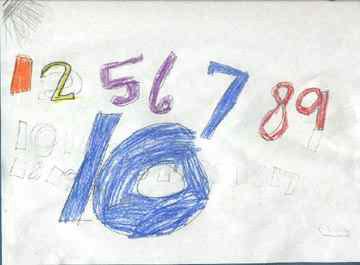 This budding genius, currently a 1st grader, says, "There are five days in a week. There are two days we do not have school. It is almost Earth Day. There are nine days until Earth Day. Sunday, Monday, Tuesday, Wednesday, Thursday, Friday, Saturday, Sunday."
This next youth makes the profound statement that, "If I were Johnny Appleseed I would plant apple trees."

For more incredible insights and stunning drawing skills, check out the Children of the Future blog, which serves as a collector of the "wondrously bizarre stories written by elementary school children on their class websites."
This budding genius, currently a 1st grader, says, "There are five days in a week. There are two days we do not have school. It is almost Earth Day. There are nine days until Earth Day. Sunday, Monday, Tuesday, Wednesday, Thursday, Friday, Saturday, Sunday."This next youth makes the profound statement that, "If I were Johnny Appleseed I would plant apple trees."
For more incredible insights and stunning drawing skills, check out the Children of the Future blog, which serves as a collector of the "wondrously bizarre stories written by elementary school children on their class websites."
Tuesday, March 28, 2006
The fallibility of human memory
One of life's certainties has been the fallibility of human memory. Unfortunately for the rest of us, that's not the case anymore. It seems there is a woman out there with perfect memory.
I'm not sure whether this is encouraging or discouraging for the rest of us, but McGaugh hopes to determine what makes AJ so special. They will be using brain scanning techniques to see if there is anything unique about her brain.
We are truly left in awe of what the human mind could be capable of.
You may also have noticed my posting frequency dropping recently. As it turns out, these topics are related. The thing is, I do not have infallible memory. Thus, I am reviewing all those things from college that I've forgotten for an upcoming professional licensure exam. Therefore, until the test is over, I will be less profuse in my thoughts. I hope to be back fully into the swing of things in a month or so. Until then, pardon my infrequency.
James McGaugh is one of the world's leading experts on how the human memory system works. But these days, he admits he's stumped.McGaugh adds,
McGaugh's journey...began six years ago when a woman now known only as AJ wrote him a letter detailing her astonishing ability to remember with remarkable clarity even trivial events that happened decades ago.
Give her any date, she said, and she could recall the day of the week, usually what the weather was like on that day, personal details of her life at that time, and major news events that occurred on that date.
Like any good scientist, McGaugh was initially skeptical. But not anymore.
"This is real," he says.
Also, her degree of recall is so much greater than any other person's in the scientific literature... She is...quite different from savants who have surfaced from time to time with extraordinary abilities in music, art or memory.McGaugh described one person who could memorize a piece of music instantly, and not forget it, but who,
Some of them can remember every single detail about the particular hobby that they have, such as baseball or calendars or art, but they are very narrow.
...couldn't make change or couldn't take a bus because he didn't know where he was.By contrast, AJ is a "fully functioning person."
I'm not sure whether this is encouraging or discouraging for the rest of us, but McGaugh hopes to determine what makes AJ so special. They will be using brain scanning techniques to see if there is anything unique about her brain.
We are truly left in awe of what the human mind could be capable of.
You may also have noticed my posting frequency dropping recently. As it turns out, these topics are related. The thing is, I do not have infallible memory. Thus, I am reviewing all those things from college that I've forgotten for an upcoming professional licensure exam. Therefore, until the test is over, I will be less profuse in my thoughts. I hope to be back fully into the swing of things in a month or so. Until then, pardon my infrequency.
Tuesday, March 21, 2006
A magic carpet
In the Sacramento airport is one of the coolest interior decorations I have seen.
 The carpet in the pedestrian bridge that connects the terminal to the parking garage portrays an aerial image of approximately 50 miles of the Sacramento River between Colusa and Chico.
I know what kind of carpet I want in my house.
Monday, March 20, 2006
Spring
That famous bookreads,
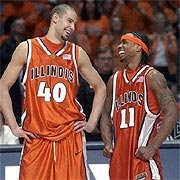
But so many Marches, there is also a time when things are not the best. For in any tournament, there is only one winner. And on this grand stage that the NCAA tourney is, my team has never gone home the winner. And thus, every spring is marked too with an inevitable realization that I must wait until next year to see sports dreams realized. For the moment at least, I am disappointed.
As Greg intimates below, we have seen the end of an era at Illinois, but I look forward to being back in the national spotlight soon.
reads, It was the best of times, it was the worst of times, it was the age of wisdom, it was the age of foolishness, it was the epoch of belief, it was the epoch of incredulity... it was the spring of hope, it was the winter of despair, we had everything before us, we had nothing before us...And so it is in March. As spring fever begins to 'spring' into our consciousness, the best time of year rolls around. March has always been my favorite month for a few reasons. It is in March that one of the best sporting events of the year, the NCAA tournament, begins its mad action. In March, the weather begins to warm and the promise of another summer is again unveiled. In March, a new baseball season begins and the NBA gears up for playoffs. And, of course, in March I turn another year older.
But so many Marches, there is also a time when things are not the best. For in any tournament, there is only one winner. And on this grand stage that the NCAA tourney is, my team has never gone home the winner. And thus, every spring is marked too with an inevitable realization that I must wait until next year to see sports dreams realized. For the moment at least, I am disappointed.
As Greg intimates below, we have seen the end of an era at Illinois, but I look forward to being back in the national spotlight soon.
Saturday, March 18, 2006

Tuesday, March 14, 2006
Mars
Are there really candy bars on Mars?
 Now Google offers an answer to that age-old question. Following in the footsteps of their Moon offering, we now have a navigable Mars. Whoa! Pretty cool.
Is Venus next?
Now Google offers an answer to that age-old question. Following in the footsteps of their Moon offering, we now have a navigable Mars. Whoa! Pretty cool. Is Venus next?
Friday, March 10, 2006
JC's Girls Girls Girls
Mark 2:17 -
On hearing this, Jesus said to them, "It is not the healthy who need a doctor, but the sick. I have not come to call the righteous, but sinners*."*The content of this linked website has neither been reviewed nor approved by Westy. Enter at your own risk.
Monday, March 06, 2006
Real Estate Agents
Is a real estate agent a good investment in selling your home?
That's the question many first-time home sellers are asking this century. A recent article in the New York Times Magazine by Stephen Dubner and Steven Levitt (authors of Freakonomics) begins to analyze exactly what an agent brings to the table. Their conclusion is,
I have to admit I foresee the real estate agent going the way of the travel agent. Hello Internet, good bye 6% commission.
That's the question many first-time home sellers are asking this century. A recent article in the New York Times Magazine by Stephen Dubner and Steven Levitt (authors of Freakonomics
) begins to analyze exactly what an agent brings to the table. Their conclusion is,...it is hard to imagine that the market will allow Realtors to maintain their hefty commissions.Needless to say, their opinions have generated a lot of discussion. Further background information can be found on their site. Most interestingly, it seems Levitt is planning a substantially more in-depth paper to properly evaluate the situation.
I have to admit I foresee the real estate agent going the way of the travel agent. Hello Internet, good bye 6% commission.
Sunday, March 05, 2006
Worldchanging
A non-profit organization called Worldchanging runs a blog that has quickly gained a sizable readership. What is Worldchanging? According to their site,
Worldchanging shows us a different world - the future we could create. A bright green future, a sustainable, prosperous, dynamic future for all. On a planet full of problems, Worldchanging calls attention to solutions, illuminating tools, models and ideas for building that future.
Recently they announced a campaign to raise resources for their organization. No matter what you may think of some of their perspectives, the site has some very interesting tidbits and I have learned a lot from following its dialogue.
To help promote the campaign, photographer Edward Burtynsky has created a movie showing some of the devastating effects of rampant pollution in certain areas of the world. The photography is stunning. I encourage you to check it out.
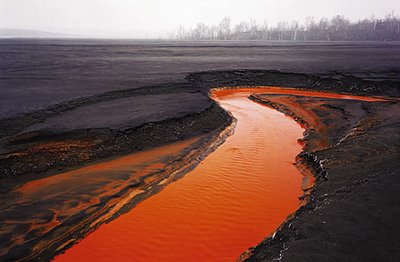
To help promote the campaign, photographer Edward Burtynsky has created a movie showing some of the devastating effects of rampant pollution in certain areas of the world. The photography is stunning. I encourage you to check it out.
nickel tailings
Thursday, March 02, 2006
Blonds going extinct?
Will natural blonds become a thing of the past? A recent article in UK's Times said,
It turns out (fortunately, depending on your perspective) it's just not true. This story was somehow fabricated. It's only an urban legend that fooled a major newspaper, and seems to have been circulating for awhile according to the WHO response.
As we all should know, genetics is much more complicated than that. (see this pic) Skin color is believed to be determined by as many as seven genes. It's no simple case of dominant and recessive. It's pretty funny how popular the story became, however. Apparently the world would consider it a loss if there were no more blonds...
A study by the World Health Organisation found that natural blonds are likely to be extinct within 200 years because there are too few people carrying the blond gene. According to the WHO study, the last natural blond is likely to be born in Finland during 2202.This 'study' has been cited by multiple news sources. My wife heard it being discussed on the radio. People are saddened--natural blonds will be no longer.
It turns out (fortunately, depending on your perspective) it's just not true. This story was somehow fabricated. It's only an urban legend that fooled a major newspaper, and seems to have been circulating for awhile according to the WHO response.
As we all should know, genetics is much more complicated than that. (see this pic) Skin color is believed to be determined by as many as seven genes. It's no simple case of dominant and recessive. It's pretty funny how popular the story became, however. Apparently the world would consider it a loss if there were no more blonds...
Tuesday, February 28, 2006
Bono at the 2006 National Prayer Breakfast
Most of you probably know Bono for his other venture. The most valuable thing he's done for the world, however, is unrelated. If you don't yet have an opinion of Bono's advocacy for the vulnerable and poor, watch his keynote address at this year's National Prayer Breakfast.
 A leader of the ONE campaign, there can be no doubt Bono is doing some very positive things. What do you think?
A leader of the ONE campaign, there can be no doubt Bono is doing some very positive things. What do you think?
Sunday, February 26, 2006
Saturday, February 25, 2006
The problem of homelessness
Malcom Gladwell, author of The Tipping Point and Blink, earlier this month wrote a fascinating article on solving the problem of homelessness.
Says Gladwell:
My opinion is that it is along the lines of being right. There are other possibilities too, though. If you're saying that some of these folks may never be contributing members of society again without public assistance, why keep them in the city, the setting for their constant failure? Maybe a camp for homeless people out in the country would be a better and cheaper possibility. Send people out to work on a farm where products could be sold, and thus allow them to contribute in that way--bringing some financial return back. They would be away from the presence of drugs and alcohol, and in a community of their peers. Is that an option? Others would simply say we should lock them up in jail for chronic loitering and public drunkenness. Although jail would be more expensive than just renting them an apartment, it would still potentially be cheaper than treating them medically as frequently as is often necessary.
In any case, it's a very interesting article well worth reading and encourage you to check it out. I won't even go into the application of power-law distribution to cleaning up the air of our cities that Gladwell cites.
(for now...)
Says Gladwell:
In the nineteen-eighties, when homelessness first surfaced as a national issue, the assumption was that the problem fit a normal distribution: that the vast majority of the homeless were in the same state of semi-permanent distress. It was an assumption that bred despair: if there were so many homeless, with so many problems, what could be done to help them? Then, fifteen years ago, a young Boston College graduate student named Dennis Culhane lived in a shelter in Philadelphia for seven weeks as part of the research for his dissertation. A few months later he went back, and was surprised to discover that he couldn’t find any of the people he had recently spent so much time with. “It made me realize that most of these people were getting on with their own lives,” he said.Wow, fascinating stuff. I had not previously heard these statistics, but it rings true. So the problem, says Gladwell, is what do we do with this last 10%? Gladwell profiles a homeless man named Murray Barr who lived in Reno, Nevada, who episodically became drunk and was forced to be hospitalized. Over the course of ten years, it was estimated that treating him cost the city over a million dollars. Said Reno policeman Patrick O’Bryan,
Culhane then put together a database—the first of its kind—to track who was coming in and out of the shelter system. What he discovered profoundly changed the way homelessness is understood. Homelessness doesn’t have a normal distribution, it turned out. It has a power-law distribution. “We found that eighty per cent of the homeless were in and out really quickly,” he said. “In Philadelphia, the most common length of time that someone is homeless is one day. And the second most common length is two days. And they never come back. Anyone who ever has to stay in a shelter involuntarily knows that all you think about is how to make sure you never come back.”
The next ten per cent were what Culhane calls episodic users. They would come for three weeks at a time, and return periodically, particularly in the winter. They were quite young, and they were often heavy drug users. It was the last ten per cent—the group at the farthest edge of the curve—that interested Culhane the most. They were the chronically homeless, who lived in the shelters, sometimes for years at a time. They were older. Many were mentally ill or physically disabled, and when we think about homelessness as a social problem—the people sleeping on the sidewalk, aggressively panhandling, lying drunk in doorways, huddled on subway grates and under bridges—it’s this group that we have in mind.
It cost us one million dollars not to do something about Murray.Hmm, so what can be done? Gladwell outlines a solution; in the case of Murray Barr,
It would probably have been cheaper to give him a full-time nurse and his own apartment.He goes on:
Simply running soup kitchens and shelters...allows the chronically homeless to remain chronically homeless.Philip Mangano, President Bush's executive director of the U.S. Interagency Council on Homelessness suggests the following:
Take some of your money and rent some apartments and go out to those people, and literally go out there with the key and say to them, ‘This is the key to an apartment. If you come with me right now I am going to give it to you, and you are going to have that apartment.’This has been done in places like St. Louis and Denver with some success. The problem people have with it, of course, is the fairness factor. Says Gladwell,
That is what is so perplexing about power-law homeless policy. From an economic perspective the approach makes perfect sense. But from a moral perspective it doesn’t seem fair. Thousands of people in the Denver area no doubt live day to day, work two or three jobs, and are eminently deserving of a helping hand—and no one offers them the key to a new apartment. Yet that’s just what the guy screaming obscenities and swigging Dr. Tich gets. When the welfare mom’s time on public assistance runs out, we cut her off. Yet when the homeless man trashes his apartment we give him another. Social benefits are supposed to have some kind of moral justification. We give them to widows and disabled veterans and poor mothers with small children. Giving the homeless guy passed out on the sidewalk an apartment has a different rationale. It’s simply about efficiency.Is this the answer to dealing with homelessness? So say the statistics are correct, 10% of the homeless are chronic and the offenders we have come to identify as homeless. That means the other 90% are doing well. So we have a system that is 90% efficient. And we have a potential economic solution to the other 10% of the problem. Is it a good one, though? What do you think?
My opinion is that it is along the lines of being right. There are other possibilities too, though. If you're saying that some of these folks may never be contributing members of society again without public assistance, why keep them in the city, the setting for their constant failure? Maybe a camp for homeless people out in the country would be a better and cheaper possibility. Send people out to work on a farm where products could be sold, and thus allow them to contribute in that way--bringing some financial return back. They would be away from the presence of drugs and alcohol, and in a community of their peers. Is that an option? Others would simply say we should lock them up in jail for chronic loitering and public drunkenness. Although jail would be more expensive than just renting them an apartment, it would still potentially be cheaper than treating them medically as frequently as is often necessary.
In any case, it's a very interesting article well worth reading and encourage you to check it out. I won't even go into the application of power-law distribution to cleaning up the air of our cities that Gladwell cites.
(for now...)
Tuesday, February 21, 2006
Oil riches, diverted
 Open sewers line a street in Ndjamena, Chad, and trash is everywhere; courtesy the New York Times
A recent article in the New York Times describes agonizingly the problem facing world efforts to lift many Third World countries out of poverty.
Chad is a country that has recently had an incredibly lucrative asset realized in oil. In exchange for a loan allowing them to facilitate exportation of that product, a deal was signed with the World Bank promising that all profits would go to alleviating poverty within the country. Unfortunately, Chad has recently seriously weakened this law in order to direct the money towards other government spending, including military. True needs are not being met.
Worldwide campaigns have mounted to urge First World countries to offer debt relief to Third World countries. Outright debt forgiveness is advocated. The problem is, many of the countries where poverty is most rampant are the most corrupt. Some of these countries, such as Chad, even have resources that could bring them out of poverty if they were distributed.
It does not seem reasonable to suggest any help to the governments of the countries on the list of the most corrupt countries in the world. However, how do you help the poor residents in those places? Is there an easy answer?
Saturday, February 18, 2006
Wednesday, February 15, 2006
I have a secret.
Hmm... I'm not sure how to say this. I don't want to come across the wrong way, but at the same time I need to get this off my chest.
Oh, heck, I'll just get it over and done with: One of my absolute favorite sporting events to watch in the whole wide world is the women's Olympic figure skating competition.
There, I said it.
Now you might reply, "Greg, what's the big deal? Women's figure skating gets the highest TV ratings at the Olympics every time around." Well, yes, but you don't understand. I really like women's figure skating. I'm not a casual observer in the matter. I'm an obsessive fanatic.
I think it goes back to my childhood. My mom loved watching Olympic figure skating, so it was on my TV at a young age. At first I watched just because it was on. I sort of figured out who the Americans were and started rooting for them. Of course, this was back in 1988 when Katarina Witt was dominating everything. I was 8 at the time and didn't understand why my mom enjoyed watching Witt skate. For my part, once I identified Witt as "not an American," I was rooting against her and pulling for Debi Thomas, the American. For some strange and unknown reason, my mom wanted "everyone to do well."
As fate would have it, Witt crushed my youthful exuberance in '88 and won her second Olympic gold medal in a row, solidifying her place in history among the all-time greats. Thomas got the bronze, which from my point of view, was respectable and made me proud to be an American. Of course, had I been the judge, I'd have given Thomas the gold and Witt the icy cold shoulder. But I'm not exactly an unbiased observer, now am I?
 The Cold War: During the 1988 Olympics, Canadian silver medalist Elizabeth Manley (left) and American bronze medalist Debi Thomas (right) did their part to contain the Communist threat.
Ever since those '88 Olympics, I basically come out of hibernation every four years to watch these 5' 2" 90-pound international gladiators, or "cold warriors" if you will, battle it out on an unforgiving deathtrap known to us laymen as the ice rink. During this special quadrennial event, I set aside my personal goals and responsibilities to pour all of my energy into my favorite skater, essentially living my life through her every move on the ice. If she succeeds, I feel better about myself. If she fails, then I'm devastated and struggle with self-esteem and patriotic depression. It's a rollercoaster ride like no other; an adrenaline rush that comes but once every four years.
However, women's figure skating is a merciless sport. These lassie assassins train in the dark, early morning hours every day of every week of every month, oftentimes for 10, 11, 12 years in a row before they ever get their Olympic opportunity. And when that time comes, the lights go on and the crowd roars. The pressure is intense. Stray but a little from your routine and that could be the difference between a gold medal and no medal. Or put more bluntly, the difference between having a lifetime of lucrative commercial endorsement deals and a lifetime of sleep-disturbing nightmares about how you blew your one big chance.
I alluded earlier to my "rooting against" certain skaters, and admittedly, I'm not proud of some of my antics over the years. I was probably at my worst during the '92 Olympics. Anytime a foreign skater would stumble, fall, or flat out get robbed by the judges, I would literally stand up and "make some noise." Dances, jigs, fist pumps, pointing at the TV and taunting... everything. Far from simply celebrating my own skater's successes, I delighted in the misery of others. Apparently my outbursts of poor sportsmanship finally set off my mom and she snapped, "Greg! Get out of here and go to your room!"
Yeah, I felt like an idiot, but I had learned my lesson. I shook it off, regrouped, and came back the next night to watch Kristi Yamaguchi become the first American since Dorothy Hamill in 1976 to bring home the gold in women's figure skating. It was beautiful. For the first time in my life, I truly understood what it meant to have the privelige of being an American sitting at home watching the Olympics take place in a country far, far away.
Leading up to the '94 Olympics, Tonya Harding's thugs conspired to whack Nancy Kerrigan's knee just before the U.S. nationals. The assault prevented Kerrigan from competing in the nationals, and nearly kept her out of the Olympics. What a lot of people forget is that if Tonya Harding had been removed from the U.S. women's figure skating team that year, as she should have been, 13-year old Michelle Kwan would have been her replacement. At the time I was 14, so seeing a 13-year old do so well got me to think, "What am I doing with my life?" I then proceded to forget about that question and immersed myself in the Olympic drama. Kerrigan recovered from the injury, faced down her fear, and gave two of the most emotional peformances of any athlete in the twentieth century. The Olympic judges gave her the silver, but the American public will forever give her the gold.
 Skating with the enemy: As the rumors swirled during the '94 Olympics, it was surreal to watch Kerrigan (left) and Harding (right) share the ice for warm-ups.
Four years later, 1998, was supposed to be Michelle Kwan's year to claim gold at the Olympics. I was certainly rooting for her, but it wasn't meant to be. Some teenybopper won the gold instead. At least this young'un was an American, so that was sort of okay, but I still had a bitter taste in my mouth. Kwan was the best in the world and I had remembered how she had been robbed of the Olympics four years earlier.
Then came 2002. I was pulling for Kwan more than ever. Yet again, some American young'un came out of nowhere to capture the Olympic gold. I felt like civil war had been declared.
Now 2006 is upon us, and Russia's Irina Slutskaya, the reigning world champion, is favored to win gold this time around.
 Slutskaya falling: When I was a naive youth, this would have meant prancing around the living room and taunting the TV set. Now it just means acting like you've been there before.
Sasha Cohen, the reigning U.S. national champion, also is expected to be a top contender.
 Note to self: Never get into a kickboxing match with Sasha Cohen.
And while I'm sure that the women's Olympic figure skating will be a great show, I can't help but feel some emptiness right now. After all, the most captivating figure skater of the past decade, Michelle Kwan, recently withdrew from these Olympics due to injury.
Some people were upset that Kwan was even put on the team after sitting out the nationals with a groin injury, but not me. She deserved a spot on the Olympic team over any of those other teenyboppers. As far as I'm concerned, I'd let her go out there and compete in a wheelchair if that's what it took. She's paid her dues and earned the right.
 Yes she Kwan: 9 U.S. national championships, 5 world championships, 2 Olympic medals, 1 living legend.
Honestly, when Michelle Kwan first skated onto my parents' TV set in 1994, I was both surprised and inspired to see a 13-year old finish second at nationals and nearly make the Olympic team. From that moment on, I wondered, "How good could she become?"
This past Sunday, twelve years later, I finally received a definitive answer to that lingering question when USOC chairman Peter Ueberroth introduced Kwan at that somber news conference in Torino, Italy:
Oh, heck, I'll just get it over and done with: One of my absolute favorite sporting events to watch in the whole wide world is the women's Olympic figure skating competition.
There, I said it.
Now you might reply, "Greg, what's the big deal? Women's figure skating gets the highest TV ratings at the Olympics every time around." Well, yes, but you don't understand. I really like women's figure skating. I'm not a casual observer in the matter. I'm an obsessive fanatic.
I think it goes back to my childhood. My mom loved watching Olympic figure skating, so it was on my TV at a young age. At first I watched just because it was on. I sort of figured out who the Americans were and started rooting for them. Of course, this was back in 1988 when Katarina Witt was dominating everything. I was 8 at the time and didn't understand why my mom enjoyed watching Witt skate. For my part, once I identified Witt as "not an American," I was rooting against her and pulling for Debi Thomas, the American. For some strange and unknown reason, my mom wanted "everyone to do well."
As fate would have it, Witt crushed my youthful exuberance in '88 and won her second Olympic gold medal in a row, solidifying her place in history among the all-time greats. Thomas got the bronze, which from my point of view, was respectable and made me proud to be an American. Of course, had I been the judge, I'd have given Thomas the gold and Witt the icy cold shoulder. But I'm not exactly an unbiased observer, now am I?
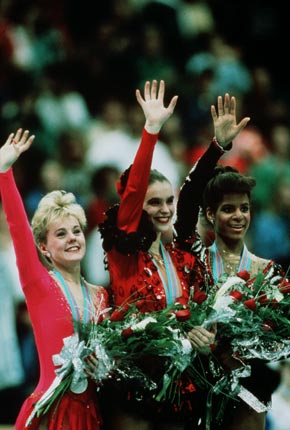 The Cold War: During the 1988 Olympics, Canadian silver medalist Elizabeth Manley (left) and American bronze medalist Debi Thomas (right) did their part to contain the Communist threat.
However, women's figure skating is a merciless sport. These lassie assassins train in the dark, early morning hours every day of every week of every month, oftentimes for 10, 11, 12 years in a row before they ever get their Olympic opportunity. And when that time comes, the lights go on and the crowd roars. The pressure is intense. Stray but a little from your routine and that could be the difference between a gold medal and no medal. Or put more bluntly, the difference between having a lifetime of lucrative commercial endorsement deals and a lifetime of sleep-disturbing nightmares about how you blew your one big chance.
I alluded earlier to my "rooting against" certain skaters, and admittedly, I'm not proud of some of my antics over the years. I was probably at my worst during the '92 Olympics. Anytime a foreign skater would stumble, fall, or flat out get robbed by the judges, I would literally stand up and "make some noise." Dances, jigs, fist pumps, pointing at the TV and taunting... everything. Far from simply celebrating my own skater's successes, I delighted in the misery of others. Apparently my outbursts of poor sportsmanship finally set off my mom and she snapped, "Greg! Get out of here and go to your room!"
Yeah, I felt like an idiot, but I had learned my lesson. I shook it off, regrouped, and came back the next night to watch Kristi Yamaguchi become the first American since Dorothy Hamill in 1976 to bring home the gold in women's figure skating. It was beautiful. For the first time in my life, I truly understood what it meant to have the privelige of being an American sitting at home watching the Olympics take place in a country far, far away.
Leading up to the '94 Olympics, Tonya Harding's thugs conspired to whack Nancy Kerrigan's knee just before the U.S. nationals. The assault prevented Kerrigan from competing in the nationals, and nearly kept her out of the Olympics. What a lot of people forget is that if Tonya Harding had been removed from the U.S. women's figure skating team that year, as she should have been, 13-year old Michelle Kwan would have been her replacement. At the time I was 14, so seeing a 13-year old do so well got me to think, "What am I doing with my life?" I then proceded to forget about that question and immersed myself in the Olympic drama. Kerrigan recovered from the injury, faced down her fear, and gave two of the most emotional peformances of any athlete in the twentieth century. The Olympic judges gave her the silver, but the American public will forever give her the gold.
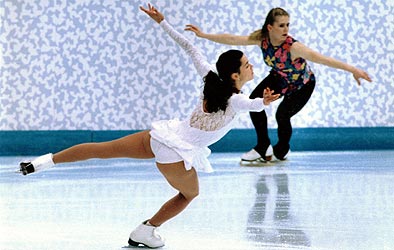 Skating with the enemy: As the rumors swirled during the '94 Olympics, it was surreal to watch Kerrigan (left) and Harding (right) share the ice for warm-ups.
Four years later, 1998, was supposed to be Michelle Kwan's year to claim gold at the Olympics. I was certainly rooting for her, but it wasn't meant to be. Some teenybopper won the gold instead. At least this young'un was an American, so that was sort of okay, but I still had a bitter taste in my mouth. Kwan was the best in the world and I had remembered how she had been robbed of the Olympics four years earlier.
Then came 2002. I was pulling for Kwan more than ever. Yet again, some American young'un came out of nowhere to capture the Olympic gold. I felt like civil war had been declared.
Now 2006 is upon us, and Russia's Irina Slutskaya, the reigning world champion, is favored to win gold this time around.
 Slutskaya falling: When I was a naive youth, this would have meant prancing around the living room and taunting the TV set. Now it just means acting like you've been there before.
Sasha Cohen, the reigning U.S. national champion, also is expected to be a top contender.
 Note to self: Never get into a kickboxing match with Sasha Cohen.
And while I'm sure that the women's Olympic figure skating will be a great show, I can't help but feel some emptiness right now. After all, the most captivating figure skater of the past decade, Michelle Kwan, recently withdrew from these Olympics due to injury.
Some people were upset that Kwan was even put on the team after sitting out the nationals with a groin injury, but not me. She deserved a spot on the Olympic team over any of those other teenyboppers. As far as I'm concerned, I'd let her go out there and compete in a wheelchair if that's what it took. She's paid her dues and earned the right.
 Yes she Kwan: 9 U.S. national championships, 5 world championships, 2 Olympic medals, 1 living legend.
Honestly, when Michelle Kwan first skated onto my parents' TV set in 1994, I was both surprised and inspired to see a 13-year old finish second at nationals and nearly make the Olympic team. From that moment on, I wondered, "How good could she become?"
This past Sunday, twelve years later, I finally received a definitive answer to that lingering question when USOC chairman Peter Ueberroth introduced Kwan at that somber news conference in Torino, Italy:
Michelle Kwan means more to the United States Olympic Committee than maybe any athlete that's ever performed. She's been a leader, she's been gracious, she's somebody that cares for so many youngsters that are training in our country.
Tuesday, February 14, 2006
A man among boys
 This past weekend I had the chance to attend a high school basketball game at Northwestern University between Glenbrook North (Northbrook, IL), the top rated team in Illinois, and Lawrence North (Indianapolis, IN), the top rated team in the country.
For those who don't know, LN is where Greg Oden plays. He is a senior in high school, but many NBA scouts say that he would have been picked first overall in the NBA draft last year if he had been eligible. He will be attending Ohio State next year with his high school teammate Michael Conley, Jr., members of the nation's top recruiting class.
Needless to say, LN dominated and won this game. They are a great team. And most of all, Oden was a man among boys. He's a phenomonal high school player, and already, at 7'1" and 245 pounds, has NBA size. Nobody at the high school level can compete with him, and he was quite obviously the best player on the floor.
I was very impressed. Oden will be very good at the college and NBA level. It will be very interesting to see how well Oden and his teammates will do next season at the NCAA level. Will they surpass Michigan's Fab Five
and win an NCAA title?
Sunday, February 12, 2006
Quail Identification

A quail:
Does this man look like a quail?

I have to admit, I don't think so.
I guess I could be wrong though, because apparently at least one fellow did... Read all about it here.
Saturday, February 11, 2006
You say Turin, I say Torino
 Opening Ceremonies of the 2006 Olympic Games in Torino, Italy / AP photo: Gene J. Puskar
Isn't it great? After four long years away, the Winter Olympics are back!
Unfortunately, there's some confusion regarding where the Olympics are being held. Most people agree that it's in Italy, but is it in Torino or Turin? After all, if you are watching on NBC, they'll say Torino. But if you're reading an AP story, they'll say Turin. So why the discrepancy?
This MSNBC story explains why most print publications say Turin:
“Turin is the English translation of the Italian word Torino,” said Clara Orban, a professor of Italian at DePaul University. “Standard practice in the United States is if a city name has been translated differently, go with the English translation.”That same MSNBC story also explains why NBC says Torino:That’s what The Associated Press is doing. Its policy — and it was around long before Turin was awarded the Olympic Games — is to use the English version of foreign cities. It’s Rome, not Roma. Munich, not Muenchen. Moscow instead of Mockba or Moskva.
The official name of the games is “Torino 2006,” and the International Olympic Committee refers to the city by its Italian name. When the games were awarded in June 1999, then-IOC president Juan Antonio Samaranch announced, “The hosts of the 2006 Games will be Torino.”Of course, if you're reading this blog, you probably won't be making it to Turin or Torino for the 2006 Olympic Games. If that's the case, you might want to check out the recent Google Earth and Google Local upgrades, Virtually Torino, to get a feel for what the city's like and where the various venues are.After NBC Sports chairman Dick Ebersol took a trip to Turin, he decided the network would go with Torino, too. NBC has the U.S. broadcast rights to the games.
“Dick was hearing the way the locals were saying Torino, and how it’s so magnificently Italian how it rolls off the tongue,” said Mike McCarley, vice president of communications and marketing for NBC Sports.
Thursday, February 09, 2006
eBay atheist
You may or may not have heard of Hemant Mehta. He is the fellow who has become known as the "eBay atheist". Basically, he's an atheist who offered, via eBay, to go to the church of the highest bidder's choice.
As it turns out, he's actually a Chicago area resident, so these events are playing out right around here. A Christian group called Off the Map won the bidding and Mr. Mehta will actually be going to several churches and offering his thoughts.
The latest church Hemant visited and reviewed was Willow Creek. He said,
As it turns out, he's actually a Chicago area resident, so these events are playing out right around here. A Christian group called Off the Map won the bidding and Mr. Mehta will actually be going to several churches and offering his thoughts.
The latest church Hemant visited and reviewed was Willow Creek. He said,
I’ll admit that if I were to convert, it would have to be at a place like this. They drew me in, and I’m not even a believer. They discarded the numerous rituals I expect to see at other churches. The sermon was interesting, and the activities that they hold would certainly be entertaining...Read all about it at the eBay atheist blog here.
Tuesday, February 07, 2006
Evangelicals to push for Environmental Action?
from the New York Times:
Despite opposition from some of their colleagues, 86 evangelical Christian leaders have decided to back a major initiative to fight global warming, saying "millions of people could die in this century because of climate change, most of them our poorest global neighbors."It will be interesting to see whether the National Association of Evangelicals (NAE) will endorse legislation in Washington that would put further caps on certain pollutants. It is a situation that is somewhat a sticking point amongst evangelicals at this time.
Among signers of the statement, which will be released in Washington on Wednesday, are the presidents of 39 evangelical colleges, leaders of aid groups and churches, like the Salvation Army, and pastors of megachurches, including Rick Warren, author of the best seller "The Purpose-Driven Life."
Some of the nation's most high-profile evangelical leaders, however, have tried to derail such action. Twenty-two of them signed a letter in January declaring, "Global warming is not a consensus issue." Among the signers were Charles W. Colson, the founder of Prison Fellowship Ministries; James C. Dobson, founder of Focus on the Family; and Richard Land, president of the Ethics and Religious Liberty Commission of the Southern Baptist Convention.It's tough because I see men on both lists who I greatly admire. Personally, though, I have to agree with Ted Haggard, the head of NAE, who says,
In my mind there is no downside to being cautious.
Monday, February 06, 2006
What You Say?
Quick, name off the top 5 spoken languages in the world today...
Before you click, list them as a comment to see how close you get. I'll do the same and we'll see how we all do.
Before you click, list them as a comment to see how close you get. I'll do the same and we'll see how we all do.
Wednesday, February 01, 2006
Diamonds in the Rough
Africa is home to many treasures our country cherishes. Its mines produce most of our diamonds and gold is a hot commodity. A recent new hot export however is of a new sort. The latest hot item is African basketball players. Blessed with natural height and athleticism, several locations in Africa have become hotbeds of potential basketball talent; none moreso than Nigeria.
The Washington Post ran an absolutely fascinating series this week on the African basketball "trade". I would highly recommend reading it entirely. Colleges and the NBA are anxiously trying to get their hands on the best talent Nigeria has to offer, but there are obstacles preventing the impoverished youngsters of that country from reaching those dreams. For many, basketball is the brightest hope of a way out of the poverty their family is wallowed in.
Unfortunately, it does not come easy. There are an extremely limited number of visas available for these guys to come over, obtain a college education, and maybe get a chance at the NBA. As well, it has become obvious to outsiders bent on making their own buck that the players are a commodity. This often means they are exploited. Agents, brokers, and go-betweens are turned to in efforts to get to the United States. One man demands 20% of future earnings. All this makes it much harder for any average person there to attempt to come to the United States.
But exploitation often does bring the players possibilities. To most, if they make it here, it's worth it. At the bottom of this is the fact that these are kids whose dream is big but the simple opportunity for an education would suffice. They hope for a future they don't even understand. They are just poor kids who deserve the best. I truly wish all had the access to make of themselves what they could. Unfortunately the system is causing the problem to worsen and even those who make it big aren't able to provide a meaningful helping hand back to their homeland due to the corruption. And those left behind gain nothing. Often the truly talented ones, that deserve a chance, are denied visas due to the greed of a few. The words of one such youth, written to a broker trying to gain him U.S. access, resound sadly:
The Washington Post ran an absolutely fascinating series this week on the African basketball "trade". I would highly recommend reading it entirely. Colleges and the NBA are anxiously trying to get their hands on the best talent Nigeria has to offer, but there are obstacles preventing the impoverished youngsters of that country from reaching those dreams. For many, basketball is the brightest hope of a way out of the poverty their family is wallowed in.
Unfortunately, it does not come easy. There are an extremely limited number of visas available for these guys to come over, obtain a college education, and maybe get a chance at the NBA. As well, it has become obvious to outsiders bent on making their own buck that the players are a commodity. This often means they are exploited. Agents, brokers, and go-betweens are turned to in efforts to get to the United States. One man demands 20% of future earnings. All this makes it much harder for any average person there to attempt to come to the United States.
But exploitation often does bring the players possibilities. To most, if they make it here, it's worth it. At the bottom of this is the fact that these are kids whose dream is big but the simple opportunity for an education would suffice. They hope for a future they don't even understand. They are just poor kids who deserve the best. I truly wish all had the access to make of themselves what they could. Unfortunately the system is causing the problem to worsen and even those who make it big aren't able to provide a meaningful helping hand back to their homeland due to the corruption. And those left behind gain nothing. Often the truly talented ones, that deserve a chance, are denied visas due to the greed of a few. The words of one such youth, written to a broker trying to gain him U.S. access, resound sadly:
Hi Coach. we are all praying over here for a positive answer from the embassy. thanks for the last mail it was very encouraging. coach please, i love hearing from u becos u are the only coach that really encourages me. please sir i need some words of encouragement from u and i want u to be my godfather. coach since i lost my dad i have never seen a man as kind as u, so please accept me as your godson. i will be grateful if my request it granted. please.
Subscribe to:
Posts (Atom)